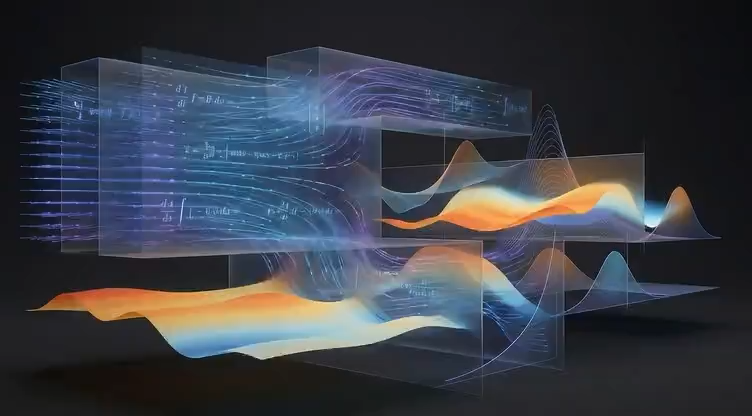
Mathematical Performance Blueprint
The Energy Ideal State Engine
We define how your energy infrastructure should behave when every asset operates at its absolute best. This ideal state is not assumed. It is mathematically derived.
InfraTwin AI builds a live digital twin of your energy infrastructure—from solar and wind to grid distribution. We define the ideal operating state for every asset, showing your team where energy loss or grid instability forms before it leads to outages or financial penalties.
From reactive grid management to predictive, AI-driven energy intelligence — powered by mathematically precise digital twins.
Power grids and renewable energy systems degrade in ways that are invisible to traditional monitoring. Solar panel efficiency drops cell by cell. Wind turbine bearings wear silently under variable load. Transformer insulation deteriorates over years. Grid frequency fluctuations compound across thousands of nodes. Operators rely on SCADA dashboards that show what happened — not what's about to happen. Between scheduled inspections, billions of dollars in energy go wasted, equipment life is shortened, and grid reliability erodes without anyone seeing the cause.
Every power network behaves differently. When generation, transmission, storage, and demand-side resources are guided by a clear ideal operating model, performance improves fast — not through guesswork, but through measurable system behaviour. These are the outcomes most operators see.
The digital twin tracks only the signals that materially impact energy yield, grid stability, asset health, and dispatch economics. Monitoring spans solar and wind generation, transmission and distribution infrastructure, energy storage, and demand-side flexibility, with emphasis on system interaction rather than isolated performance.
InfraTwin AI uses autonomous drones as a data-capture layer for the energy digital twin. Each flight feeds spatially aligned, time-stamped visual and thermal data directly into the platform, keeping the twin synced with real asset conditions across solar farms, wind installations, and grid infrastructure.
InfraTwin AI uses drone-mounted thermal and RGB sensors to detect hotspots, micro-cracks, soiling, and degradation across solar arrays at string and cell level. Thermal data is mapped onto the digital twin to quantify generation losses and prioritise maintenance.
InfraTwin AI inspects turbine blades, nacelles, and tower structures without climbing or shutdowns. High-resolution imagery detects leading-edge erosion, lightning damage, and surface cracks, feeding directly into the predictive maintenance layer of the digital twin.
InfraTwin AI captures accurate 3D models of substations, transmission corridors, and right-of-way zones using drone-based LiDAR and photogrammetry. These models support vegetation encroachment detection, thermal rating validation, and infrastructure expansion planning.
The energy digital twin follows a clear, engineered process. We model the ideal behaviour of your energy assets, capture only the signals that matter, reconstruct your infrastructure in 3D, apply predictive AI on top, and give your operations team an XR workspace that keeps the real grid aligned with its ideal state — continuously, not periodically.
Mathematical Performance Blueprint
We define how your energy infrastructure should behave when every asset operates at its absolute best. This ideal state is not assumed. It is mathematically derived.
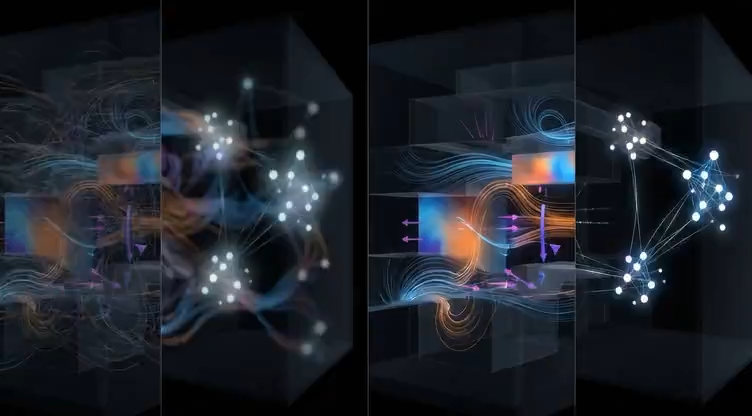
AI-Driven Data Point Discovery
Energy systems generate massive volumes of telemetry data from SCADA, smart meters, PMUs, and IoT sensors. Most of it does not explain behaviour.
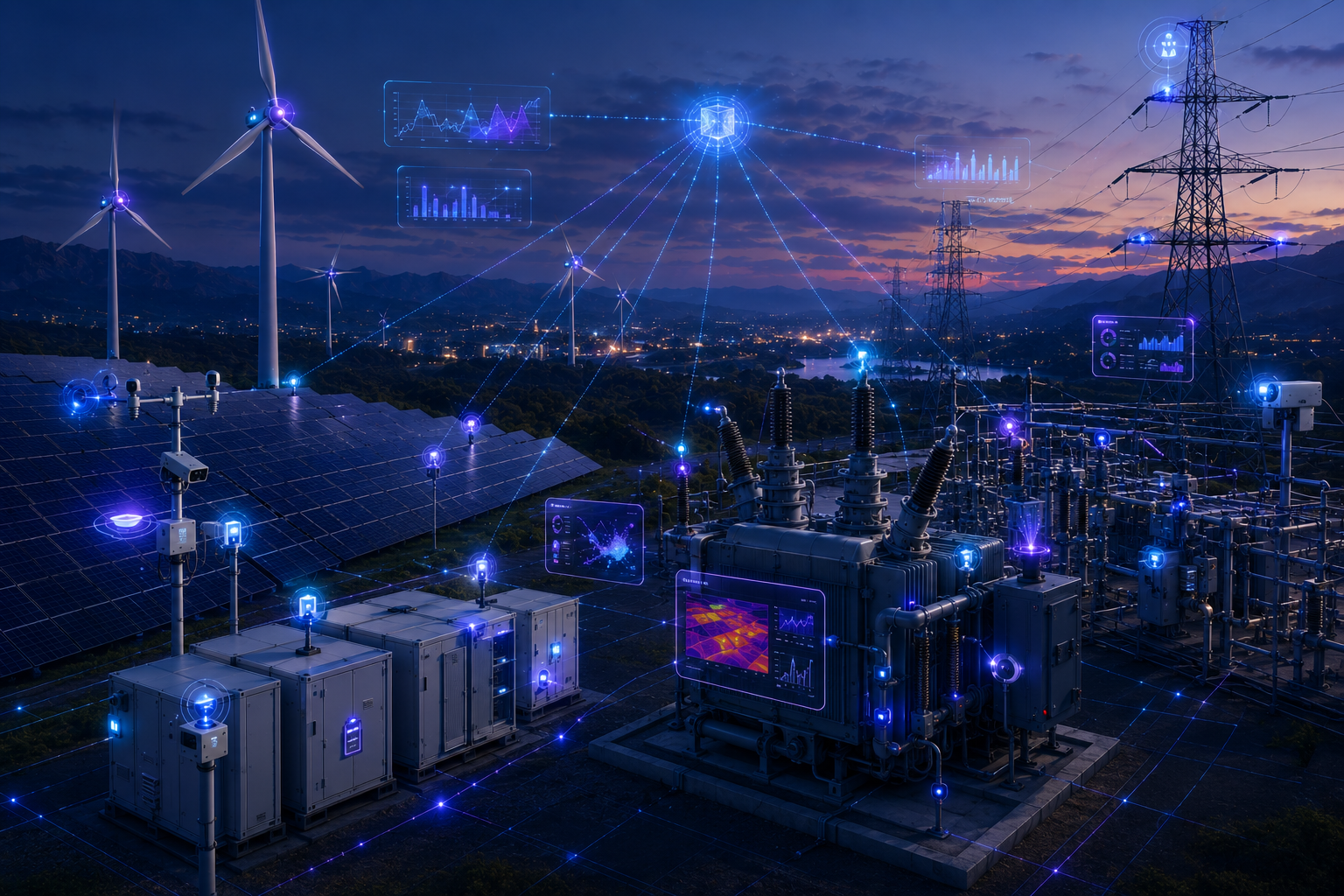
Smart Sensors, SCADA & Computer Vision Deployment
The digital twin depends on how accurately the real energy infrastructure is observed.
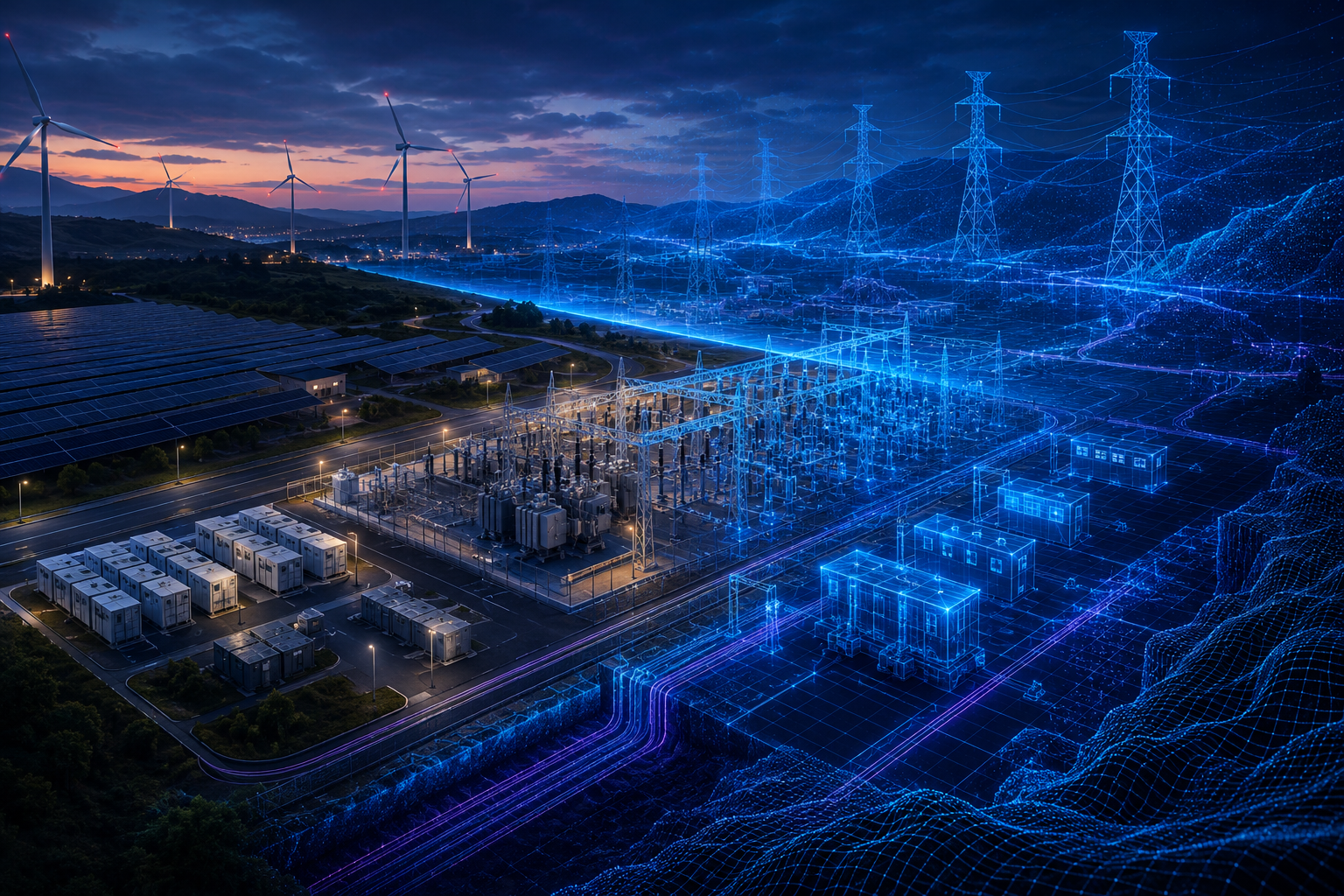
Photorealistic 3D Reconstruction
To understand how an energy system operates, the digital twin must visually match the real infrastructure.
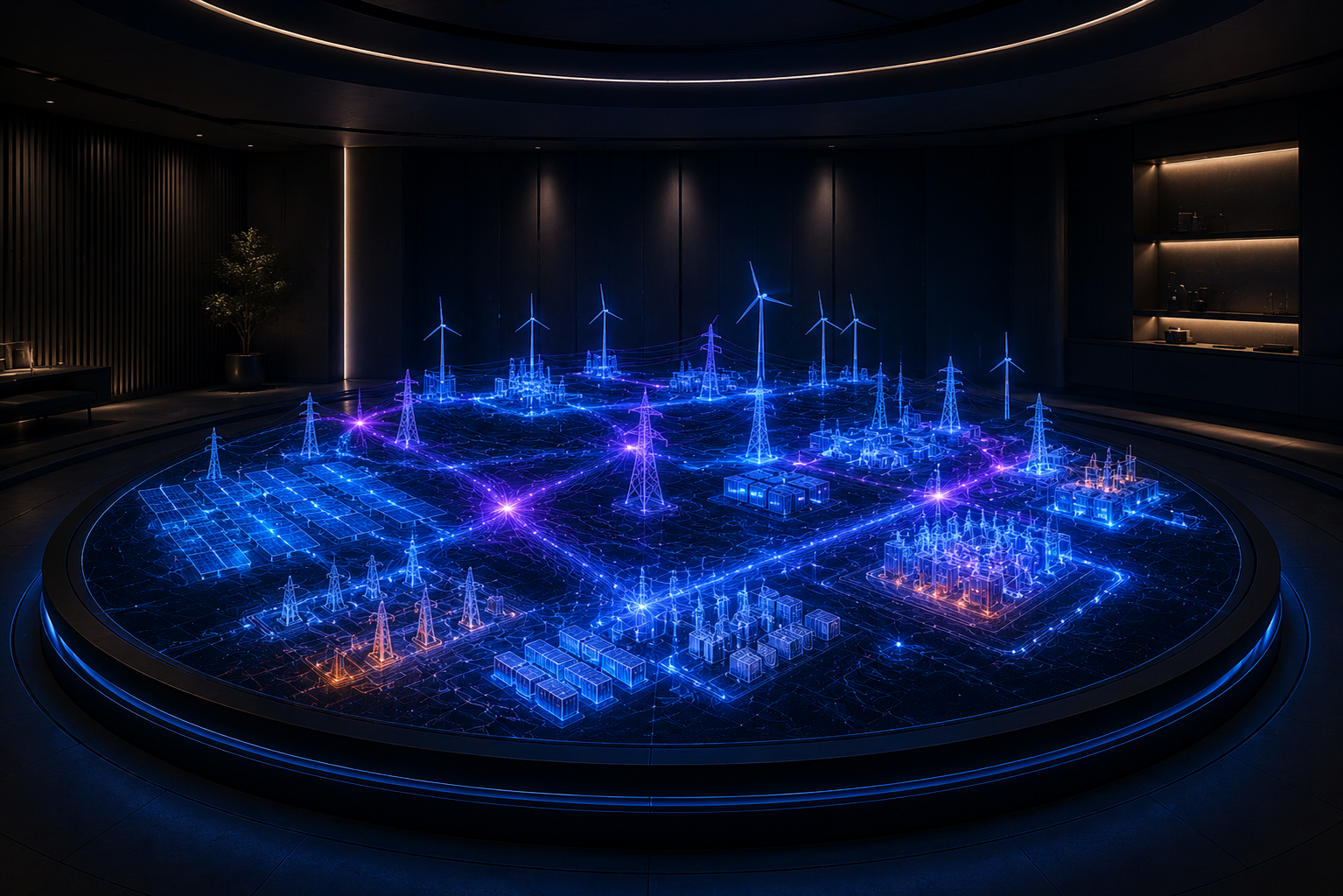
AI Models for Prediction, Simulation & Optimisation
The digital twin continuously compares real energy system behaviour against the mathematically defined ideal state.
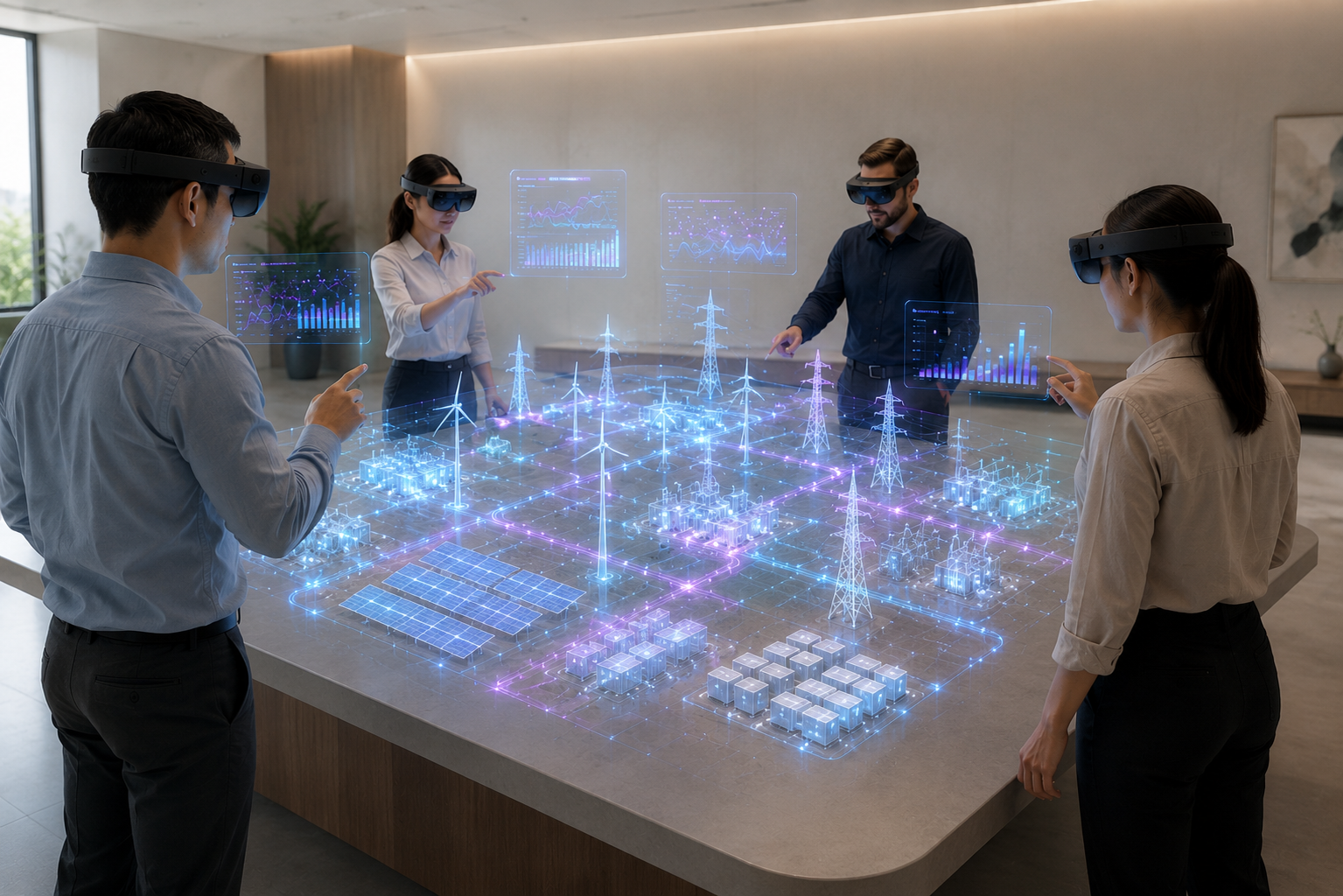
XR-Based 3D Workspace
The digital twin becomes operational when teams can step inside it.
Observation agents collect real-time signals from solar arrays, wind turbines, substations, transmission lines, battery storage systems, and smart meters. They translate energy flow, equipment stress, environmental conditions, and grid behaviour into structured data that reflects how the system is actually performing.
Reasoning agents organize raw telemetry into meaningful operational relationships. They identify degradation patterns across asset fleets, interpret deviations from ideal grid operating states, model renewable intermittency impacts, and forecast how the system will evolve under changing weather, demand, and market conditions.
Decision and governance agents translate system understanding into coordinated operational actions. They recommend dispatch strategies, trigger maintenance workflows, optimize storage cycling, ensure grid code compliance, and maintain alignment between operational plans and the real-time state of the grid.
InfraTwin AI focuses on the three energy verticals where digital twins deliver the highest operational impact, fastest ROI, and strongest market demand. Each represents a multi-billion-dollar opportunity with proven, scalable use cases.
Renewable energy assets operate in harsh, variable environments where performance degrades invisibly. Solar panels lose output to soiling, micro-cracks, and thermal stress. Wind turbines suffer bearing wear, blade erosion, and yaw misalignment. Traditional monitoring catches problems at the farm level — not the asset level. InfraTwin AI builds per-panel and per-turbine digital twins that track real-time performance against ideal generation curves, detect degradation at the individual asset level, and predict failures weeks before they occur. **Why It Matters Commercially:** Global renewable energy capacity is growing at over 500 GW per year. Every percentage point of recovered generation translates to millions in revenue. Solar and wind operators compete on levelized cost of energy (LCOE) — and the operators with the best asset intelligence win. Equipment OEMs, independent power producers, and utility-scale developers are all investing in digital twin technology to reduce O&M costs and maximize energy yield.
Impact: 8–15% increase in energy production • 35% reduction in unplanned downtime • 26% reduction in O&M costs
Explore the full technical specifications and case studies.
Interested in a custom demonstration for your facility?
Here are examples of how the ideal-state Energy twin performs when deployed on real power systems. Each case focuses on measurable gains — lower losses, fewer outages, and better grid stability.
GE partnered with E.ON Climate and Renewables to implement digital twin technology across its wind fleet. By simulating turbine interaction and adjusting for the "wake effect" (where turbulence from one turbine impacts others), they optimized the entire farm's output.
Siemens Energy implemented digital twins for national grid operators (like Fingrid in Finland) to model complex transmission networks. The twin simulates power flows and predicts congestion to manage the integration of intermittent renewable sources.
SMA Solar uses digital twins of its central inverters in utility-scale solar farms. By continuously comparing real-time operational data (temperature, voltage, current) against the mathematical ideal, they predict component stress.
Loading 3D Experience...
Get in touch to learn how InfraTwin AI can help you achieve grid excellence.
Email Us
hello@infratwin.ai