
InfraTwin AI

Personalized Medicine & Patient Digital Twins

InfraTwin AI creates living digital replicas of your patients — from individual organs to full physiological systems. We combine real-time clinical data, genomic profiles, imaging, and wearable signals into a continuously updating virtual patient. Your clinical team sees how a disease is progressing, how a treatment will respond, and where risks are forming — before decisions are made on the real patient.

Why Healthcare Problems Stay Hidden

Medicine today treats populations, not individuals. Drug dosages follow averages. Treatment protocols assume standard responses. Disease progression is monitored through periodic snapshots — lab results taken days apart, imaging done weeks apart. Between those snapshots, the patient's body is a black box. Clinicians are forced to react to symptoms that have already escalated, rather than intervening at the earliest signal of change.

Typical Healthcare Operations

  • Treatment plans based on population averages
  • Disease progression monitored through periodic snapshots
  • Drug dosages follow standard protocols
  • Adverse reactions discovered after they occur
  • Surgical planning based on static imaging
  • Clinical decisions rely on experience and intuition
  • Patient data siloed across departments

With InfraTwin AI

  • Treatment plans calibrated to each patient's unique physiology
  • Continuous physiological monitoring via the patient's digital twin
  • Drug response simulated on the virtual patient before administration
  • AI detects risk signals and flags adverse trends early
  • Surgical rehearsal on a 3D patient-specific anatomical twin
  • Clinical decisions supported by real-time predictive models
  • Unified patient twin integrating all data streams
Video Coming Soon

What You Can Expect from a Patient Digital Twin

When clinical decisions are guided by a continuously updating virtual replica of each patient, outcomes improve measurably — not through guesswork, but through mathematically modelled physiological behaviour. These are the results most healthcare organizations see.

Diagnostic Accuracy +30–45%

  • Disease patterns detected earlier via continuous modelling
  • AI correlates signals across genomic, imaging, and vitals data
  • Rare condition identification improved through population-scale twin comparison

Adverse Drug Events Down 40–60%

  • Drug interactions simulated on the virtual patient before prescription
  • Dosage optimized per individual metabolic profile
  • Real-time monitoring flags early physiological deviation

Treatment Costs Reduced 20–35%

  • Fewer trial-and-error treatment cycles
  • Reduced readmissions through predictive discharge planning
  • Surgical complications minimized via pre-operative simulation

Additional Strategic Benefits

Accelerated clinical trial recruitment through twin-based patient matching
Improved patient engagement and shared decision-making
Enhanced chronic disease management through continuous virtual monitoring
Reduced time-to-diagnosis for complex multi-system conditions
Video Coming Soon

What We Model in the Patient Digital Twin

The patient twin integrates only the signals that influence diagnostic accuracy, treatment response, disease progression, and care outcomes. These data streams form the foundation for predictive, personalized clinical intelligence.

Organ & System-Level Twins

  • Cardiovascular system — heart rhythm, ejection fraction, valve dynamics, vascular resistance
  • Respiratory system — lung capacity, gas exchange efficiency, ventilation response
  • Neurological system — neural activity patterns, cognitive response metrics, neurotransmitter modelling
  • Musculoskeletal system — joint mechanics, bone density mapping, gait analysis
  • Metabolic system — glucose regulation, insulin sensitivity, metabolic rate tracking

Genomic & Molecular Data

  • Genetic predisposition mapping for disease risk stratification
  • Pharmacogenomic profiling for drug response prediction
  • Biomarker tracking for early disease detection
  • Protein expression and pathway modelling
  • Tumour mutation profiling for oncology treatment planning

Real-Time Clinical & Wearable Data

  • Continuous vitals — heart rate, SpO2, blood pressure, temperature
  • Wearable sensor data — activity, sleep, stress, glucose (CGM)
  • Electronic Health Records (EHR) integration — lab results, prescriptions, clinical notes
  • Medical imaging — CT, MRI, X-ray, ultrasound fed into 3D anatomical models
  • Patient-reported outcomes and symptom tracking

Patient Signal Ecosystem

InfraTwin AI ingests data from every layer of the patient's clinical reality — wearable devices, medical imaging systems, and electronic health records. These diverse signal streams are fused into a single, continuously updating patient digital twin that gives clinicians a complete physiological picture in real time.

Wearables & Continuous Monitoring

Smartwatches (Apple Watch, Fitbit), continuous glucose monitors (CGMs), Holter monitors, smart patches, and pulse oximeters stream real-time heart rate, HRV, SpO₂, activity, sleep quality, blood glucose, and skin temperature directly into the patient twin — capturing the patient's physiology between clinic visits.

Medical Imaging & Diagnostics

MRI scans, CT scans, ultrasound, echocardiograms (Echo), X-rays, and PET scans are reconstructed into patient-specific 3D anatomical models. Surgeons rehearse procedures on exact organ replicas. Oncologists visualise tumour positioning. Cardiologists simulate interventional pathways — all derived from the patient's own imaging data.

Clinical Records & Genomic Data

Electronic Health Records (EHR/EMR), lab results, pathology reports, prescription history, and genomic sequencing data are structured and time-aligned within the twin. Pharmacogenomic profiles predict drug response. Biomarker trends reveal disease progression. Every clinical signal is unified into one longitudinal patient model.

Drone Footage Coming Soon

How InfraTwin AI Delivers Precision for Personalized Medicine

The patient twin follows a clear, engineered process. We build the ideal physiological model, capture the right clinical signals, reconstruct patient anatomy in 3D, run predictive AI on top, and give your clinical team an XR workspace for collaborative decisions.

Visualizing Physiological Performance Blueprint

Physiological Performance Blueprint

The Patient Ideal State Engine

We mathematically define how each patient's body should function at its optimal state. Using clinical baselines, genomic data, age-adjusted norms, and population health models, we build a profile representing the patient's ideal physiological performance. This becomes the benchmark the digital twin uses to detect deviation, predict deterioration, and guide treatment.
Visualizing AI-Driven Clinical Data Discovery

AI-Driven Clinical Data Discovery

Finding the Signals That Drive Patient Outcomes

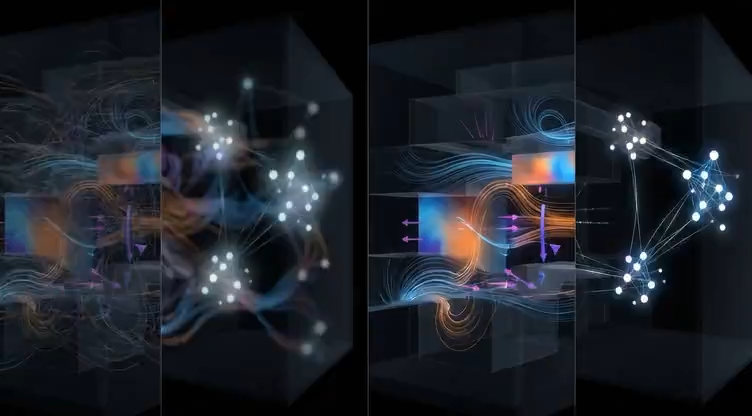
Every patient generates thousands of data points. Most of them are noise. InfraTwin AI identifies the specific clinical variables that actually explain disease behaviour, treatment response, and risk trajectory. We use machine learning to surface which biomarkers, vitals, and genomic markers matter most for each condition — so the twin monitors what counts.

Visualizing IoT, Wearables & Clinical Data Integration

IoT, Wearables & Clinical Data Integration

Capturing Accurate Signals from the Patient

The digital twin depends on continuous, accurate observation. We integrate data from wearable biosensors, continuous glucose monitors, cardiac monitors, pulse oximeters, and clinical imaging systems. EHR data, lab results, and physician notes are ingested and structured. Every signal is time-stamped and spatially aligned to the patient's virtual anatomy.

Visualizing Photorealistic 3D Patient Reconstruction

Photorealistic 3D Patient Reconstruction

Patient Anatomy Rebuilt in 3D

Using CT, MRI, and ultrasound imaging data, InfraTwin AI builds photorealistic 3D reconstructions of patient-specific organs and anatomical structures. These aren't generic models — they are exact replicas of the individual patient's heart, brain, lungs, or skeletal system. Surgeons can rehearse procedures. Oncologists can visualize tumour positioning. Cardiologists can simulate interventional pathways.

Visualizing Predictive Clinical AI Models

Predictive Clinical AI Models

AI That Predicts, Prevents, and Personalizes

The digital twin continuously compares real patient behaviour against the mathematically defined ideal state. AI models detect when physiological parameters begin drifting toward risk thresholds — days or weeks before clinical symptoms appear. The system simulates treatment options on the virtual patient, predicts drug response, flags contraindications, and recommends the most effective intervention path.

Visualizing XR-Based Clinical Workspace

XR-Based Clinical Workspace

Clinical Teams Working Inside the Twin

The patient digital twin becomes operational when clinical teams can step inside it. InfraTwin AI provides an extended reality (XR) environment where surgeons, physicians, and specialists can collaboratively explore patient anatomy, review AI-generated risk forecasts, rehearse procedures, and align on treatment strategy — all within a shared, immersive 3D workspace.

AI Agents Powering the Patient Twin

Three specialised AI agents work continuously across the patient digital twin — capturing physiological reality, interpreting clinical patterns, and guiding treatment decisions grounded in real-time patient intelligence.
Capturing the Patient's Physiological Reality

Observation Agents

Observation agents ingest real-time data from wearable devices (Fitbit, Apple Watch, CGMs, Holter monitors), process medical imaging (MRI, CT, Echo, ultrasound) into structured spatial data, and parse EHR/EMR records, lab results, prescription history, and clinical notes. Every signal is time-stamped and spatially aligned to the patient's 3D anatomical twin.

Interpreting Patterns and Anticipating Clinical Risk

Reasoning Agents

Reasoning agents detect physiological drift before symptoms appear — subtle HRV changes signalling cardiac risk, gradual biomarker shifts indicating disease progression, or metabolic patterns predicting adverse drug reactions. They correlate genomic profiles with drug metabolism, model disease trajectories across organ systems, and identify rare condition patterns through population-scale twin comparison.

Guiding Clinical Action Through Patient Intelligence

Decision & Governance Agents

Decision and governance agents translate patient intelligence into coordinated clinical actions. They recommend personalised treatment plans calibrated to the individual twin, simulate drug interactions on the virtual patient before prescription, generate pre-surgical rehearsal pathways on 3D anatomical models, and flag contraindications and compliance risks in real time.

AI Agents Video Coming Soon

Ready to Transform Patient Care?

Get in touch to learn how InfraTwin AI can help you deliver personalized, predictive medicine powered by patient digital twins.

Back to Industries